Issue 29: We've Seen This Rerun
Stocks are priced like it's 2000 again, with two honest ways to read it. What that means for private markets, plus three reads on running your raise.


Investors are paying more for stocks right now than at almost any time in history. The last time prices ran this hot was the dot-com bubble in 2000, and before that.....right before the crash of 1929.
There are two honest ways to read that. One says it is a bubble, a bet on a perfect future that rarely arrives, and we have seen how that movie ends. The other says this time really is different, that real growth and AI will show up and earn the price. Nobody knows yet which one is right.
That tension does not stop at the public market. If stocks are overdone, private markets are riding the same wave, and the dot-com rerun historically reached venture and startups a few months after the public peak. If this run is real, private is the better place to be, where you can still own an actual business at a fair price.
Same rerun, two endings.
The Most Expensive Market Ever. Now It Has to Prove It.
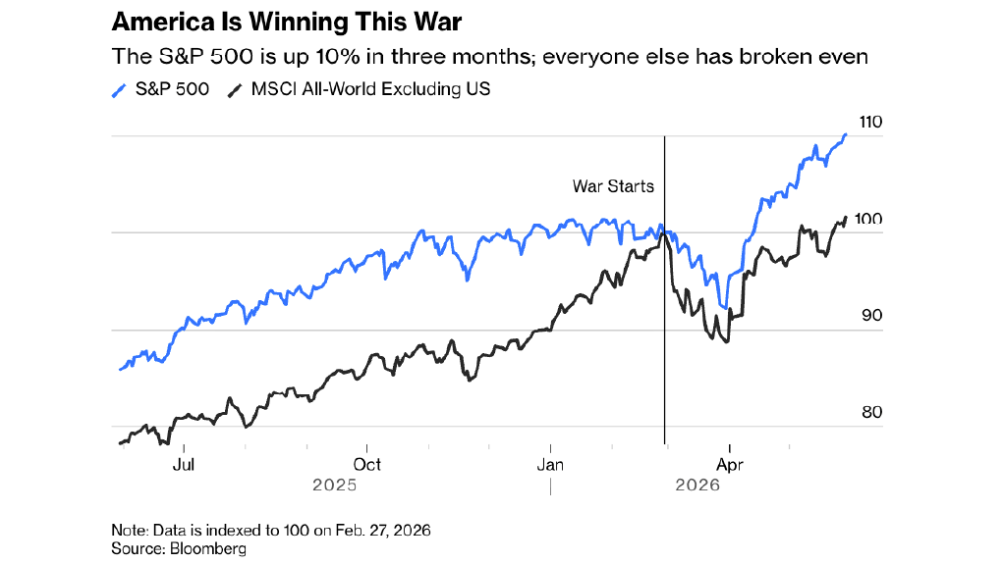
There is a war on, the kind that usually rattles markets, and Bloomberg's John Authers calls it a strategic debacle. Yet US stocks are up about ten percent since it started, while the rest of the world has gone nowhere. Investors have decided it will not do real damage, and they have kept buying.
Peel that back a layer and it gets more interesting. All of that confidence is sitting on top of the most expensive market in modern history. The measure that smooths a decade of earnings is at its highest since 2000, above where it sat before the 1929 crash, and the price investors will pay for a dollar of company sales has never been higher than it is today.
Here is where it gets honest, because the same numbers cut both ways. Measured against the profits companies are expected to earn next year, the market looks expensive but not crazy, since those forecasts jumped in the last three months and a bigger forecast makes today's price look more reasonable. Measured against the sales companies are actually making right now, there is no such cushion, and the price has never been steeper. Authers puts it plainly: it all comes down to whether those revenues and margins show up exactly as promised.
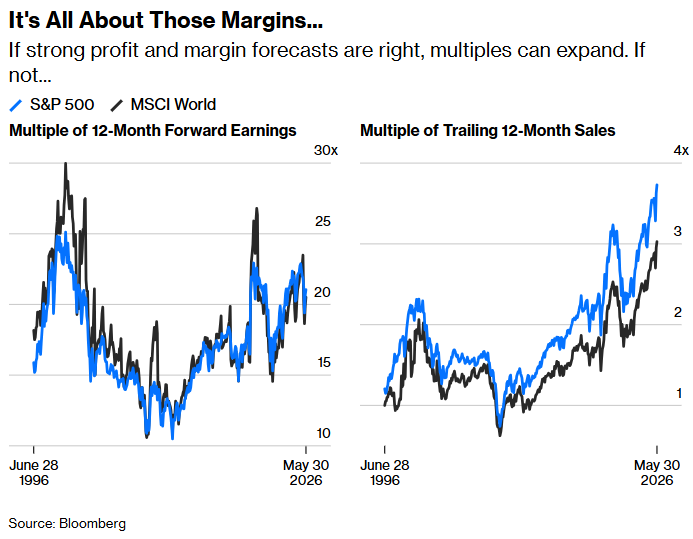
So you can read it two ways, and reasonable people do.
If the profit and margin forecasts are right, the prices hold and can even climb from here. If they are wrong, there is nowhere to hide, because nothing in today's price assumes anything short of the good outcome.
I liked John Authers take on this...he laid out the full case in Bloomberg this week. [Read it here ]
Run your raise like a sales pipeline

The single biggest predictor of a closed round is not traction, pedigree, or network.
It is velocity through a pipeline.
Operators who have tracked thousands of raises keep landing on the same finding: momentum closes rounds, and roughly eighty percent of the work happens before the first call. Read the playbook.
The valuation is the press release. The terms are the deal.

Travis Kalanick built Uber and owned under nine percent of it at IPO. The headline number gets celebrated and, at the early stages, matters least. Dilution, the four terms that decide control, and the clock that starts the day the money lands are where the real cost hides. Read what a round actually costs you.
At Pre-Seed, a Customer Has to Vouch for You

The bar moved. A good idea and a working prototype are no longer enough to raise a first round. Now a real customer has to be able to tell an investor why they want your product and why they would pay for it. Here is how founders are clearing the new bar, and getting their house in order before the first call. Read it.
When you want to see what running a raise on one link looks like, take the platform walkthrough.
The Latest in Private Markets
- Crypto flipped to a fundamentals trade. Broad benchmarks are down on the year while assets with measurable usage diverge upward, with Hyperliquid rising roughly 72% in a month against a falling tape. When the momentum bid leaves, capital concentrates on what generates and returns value. (Bitwise)
- Tokens are getting repriced on revenue. Most major 2025 token launches are down roughly 90% from their first spike, hit by constant unlocks and thin circulating supply. The cause was as much poor token design as speculation. Tokenizing an asset does not exempt it from the test. It applies the test faster. (Delphi)
- What a zero-fee platform actually costs. The fee question is worth asking before you wire. We do not take a cut of your raise, and here is exactly what that means and why. Read it.
A note from Honolulu
Nothing from me this week on the personal side. Just thankful for all of you and your readership. We are almost 30 issues in! I am holding back some exciting updates on the product side for next week.
Wishing all of you a great weekend.
Best,
Thomas
Honolulu, Hawaii | June 5, 2026

The Deal Box Dispatch is published weekly every Friday. Deal Box operates as a Title II matchmaking platform under the JOBS Act Section 201(c) exemption, with zero transaction fees. We are not a broker-dealer. We earn on technology and advisory services provided to issuers only. Nothing in this newsletter is a recommendation, solicitation, or offer to buy or sell any security.