
Issue 33: Why Stocks Are Falling
Four explanations for this month's selloff, a closer look at the election, and three views on what happens if prices keep falling.


We had a hard time choosing what to write about this week, because it held a year's worth of news. On Wednesday, November 18, Anthropic sold shares to the public for the first time. The company and its seven co-founders raised $107.3 billion, according to Bloomberg. That total covers the public sale and a private sale alongside it, and it is the largest on record.
Today the S&P 500 fell 3.7 percent. It ended the day more than 10 percent below its recent high, The New York Times reported.
The week held more than that. Nvidia reported its first results since Jensen Huang resigned as chief executive on November 12. Outages hit the FAA, the NSA, Microsoft, Apple and Chase. The organizations involved put them down to system upgrades that went wrong and not to attacks, according to The Wall Street Journal.
The question we heard most was not really about stock prices. People wanted to know what is causing all of this, and whether it is connected. There is more than one answer. This issue starts with why stocks are falling and then turns to what could happen next.
Why Stocks Are Falling
Dean Curnutt, the founder of Macro Risk Advisors, was asked on Bloomberg today how much of the selloff is the election. He said attribution is Wall Street's favorite sport and that the causes are always difficult to separate. Four explanations came up this week.
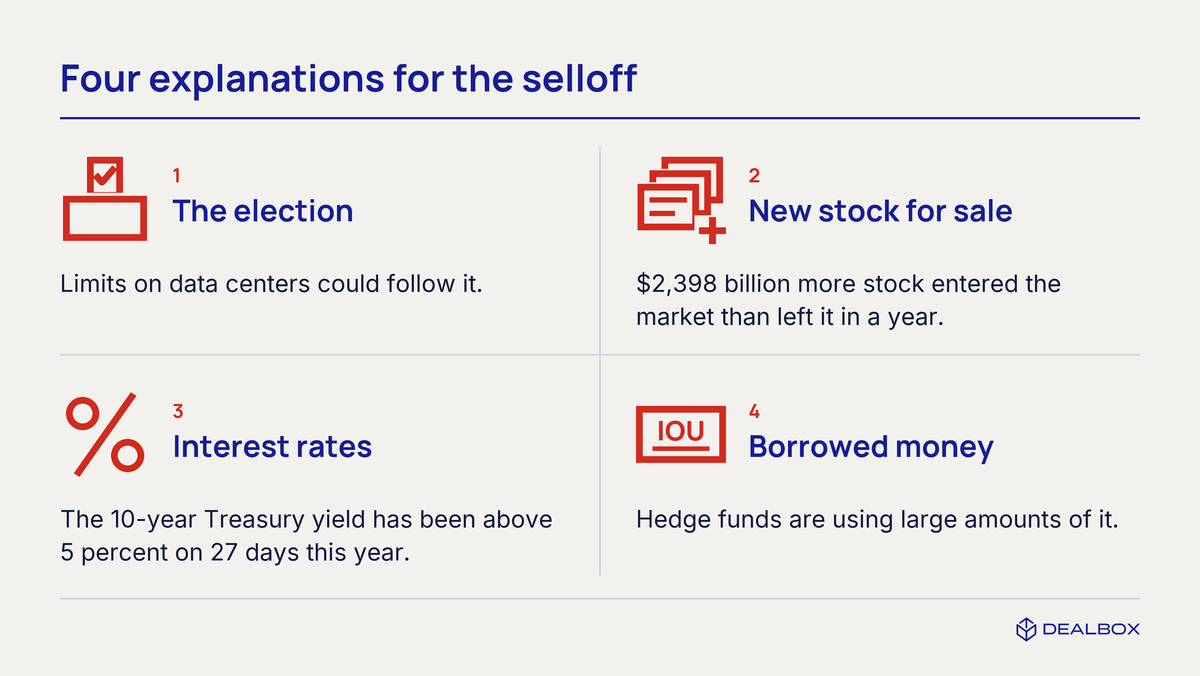
The stock figure comes from Owen Lamont of Acadian Asset Management, and SpaceX alone accounts for $2,206 billion of it. The count of days above 5 percent is Bloomberg's. The other two explanations are Curnutt's.
A closer look at the election
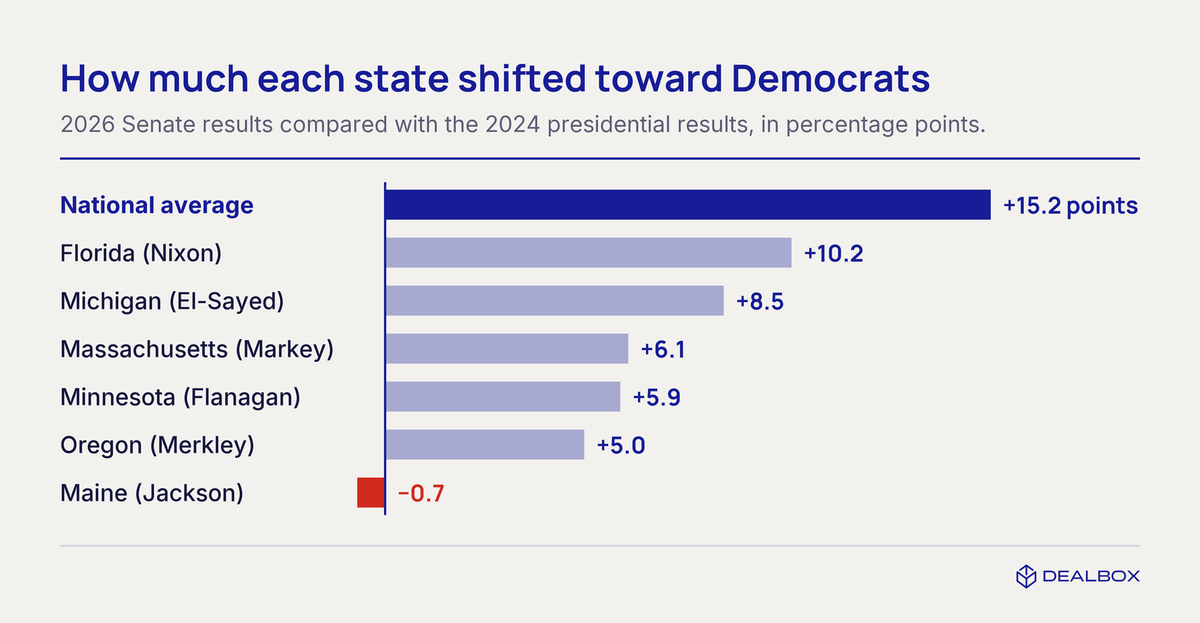
The midterm elections were on November 3, and Democrats won by a wide margin. They are on track to win the national vote by 13 or 14 points, according to Nate Cohn of The New York Times. Senate races moved 15.2 points toward Democrats on average, compared with the 2024 presidential vote.
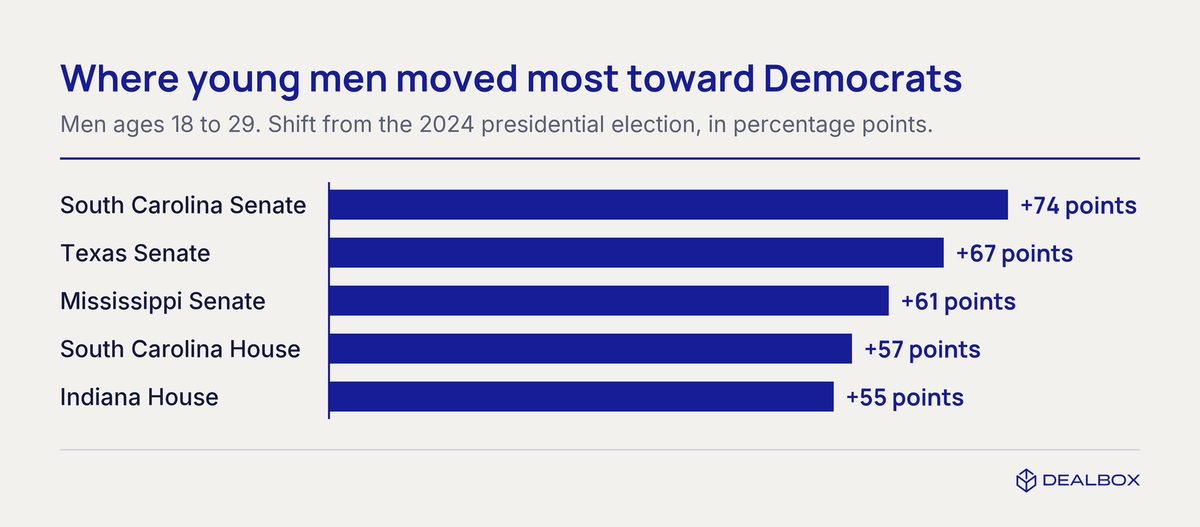
Young men were among the groups that moved the most. Men ages 18 to 29 swung toward Democrats in every state, and in the Texas Senate race they moved 67 points. The Times calls its figures estimates, and many are still preliminary. Read the full Times breakdown.
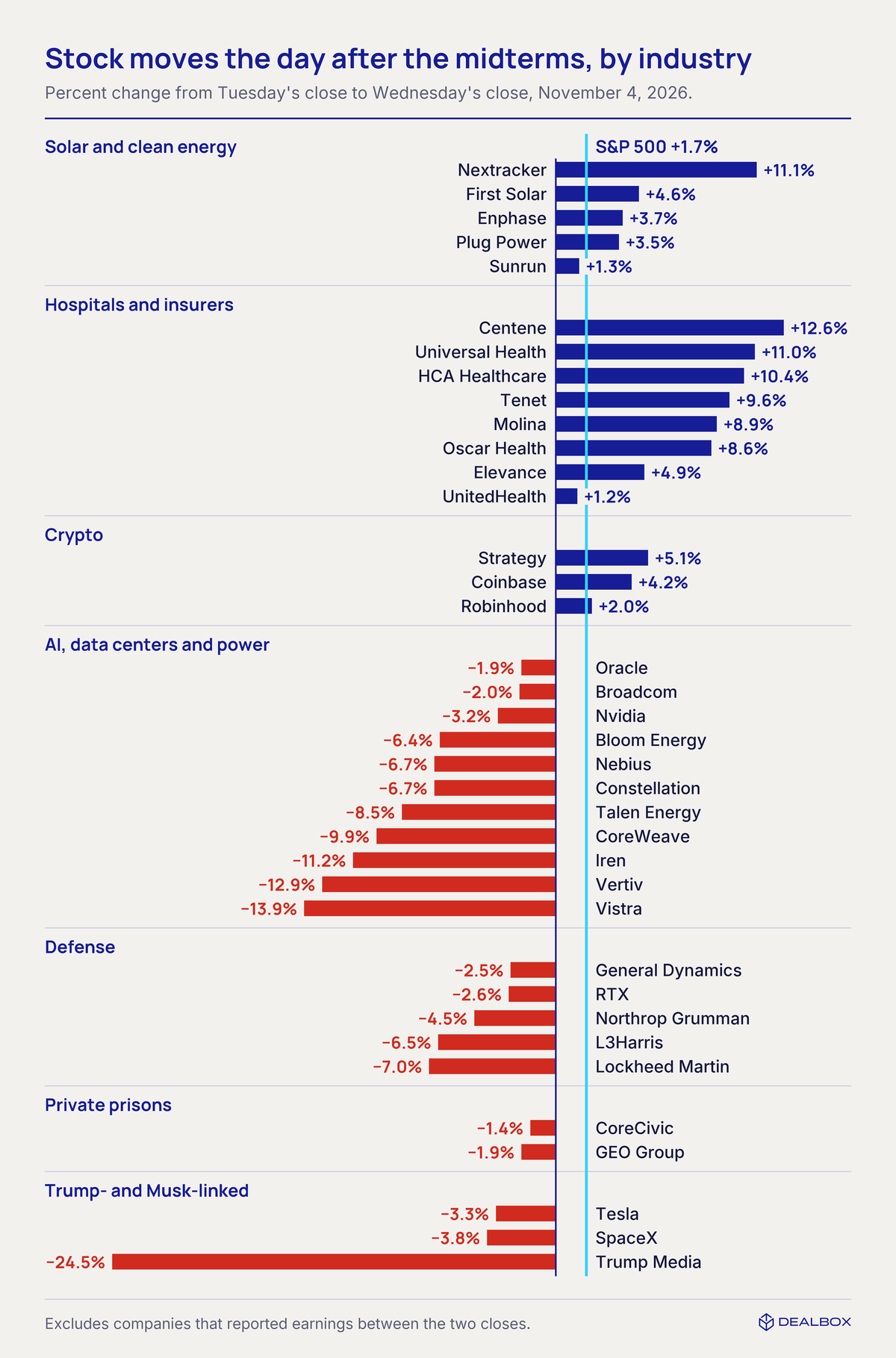
The day after the vote, the market showed what it expects from the result. The S&P 500 rose 1.7 percent on November 4. Jason Furman, a Harvard economist, sorted the day's moves by industry in his Econvitals morning note. Solar companies, hospitals and health insurers rose. Every AI, data center and power company on his list fell. Furman wrote that a Democratic win was already in prices, so the moves show only how much larger it was than expected.
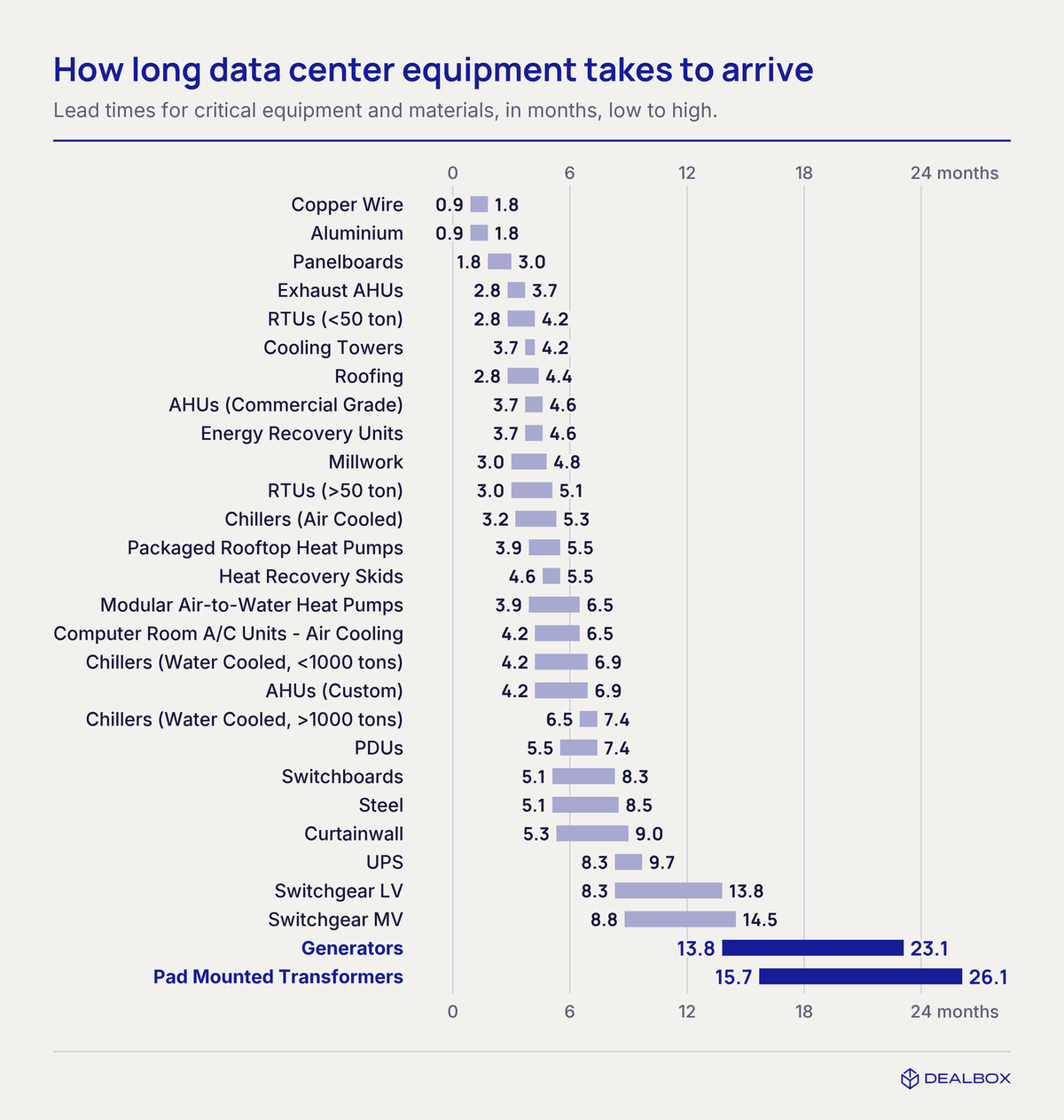
Data centers were already slow to build before the election. Torsten Slok, the chief economist at Apollo, charted how long the equipment takes to arrive. Generators take about 14 to 23 months, and the largest transformers take about 16 to 26 months.
If Stocks Keep Falling
Three questions follow from all of this, and each has a named answer.
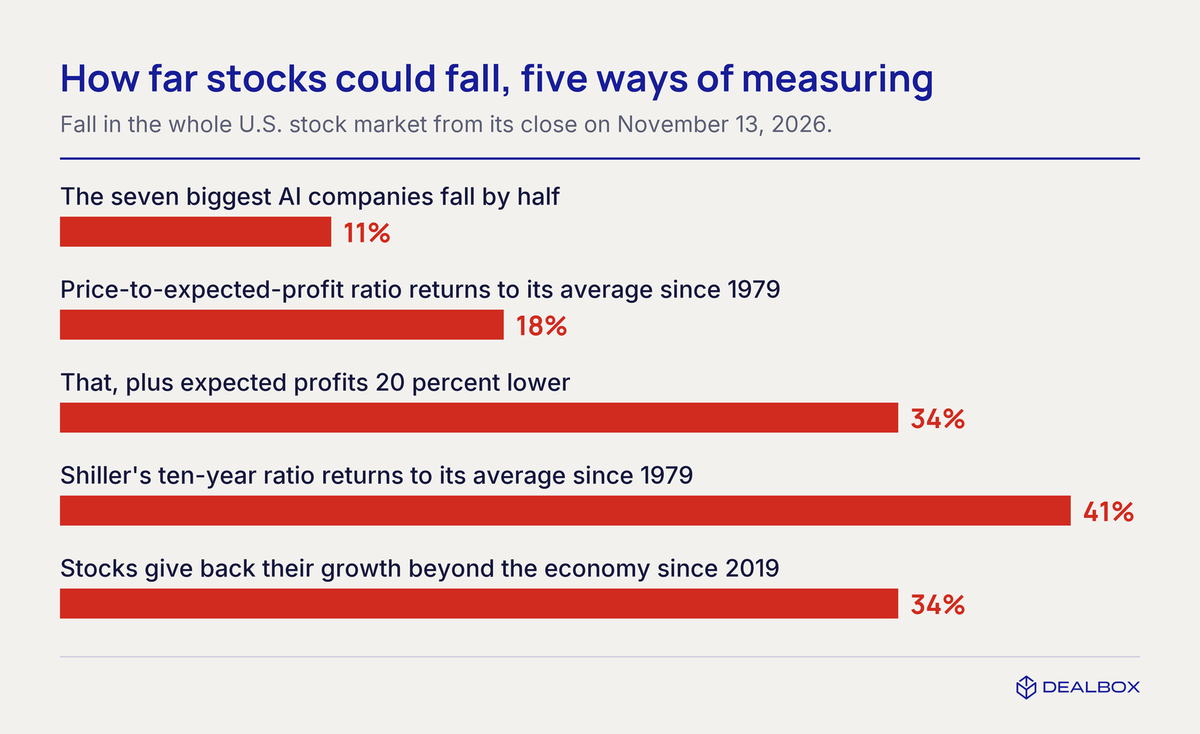
How far could stocks fall? Jason Furman worked through it on November 15, and he wrote that a decline is not what he expects. If the seven largest AI stocks lost half their value, the whole market would fall 11 percent. His other methods give falls of 18 to 41 percent, each measured from the close on November 13. If forced to pick one number, he would choose 25 percent. Read the full Econvitals breakdown.
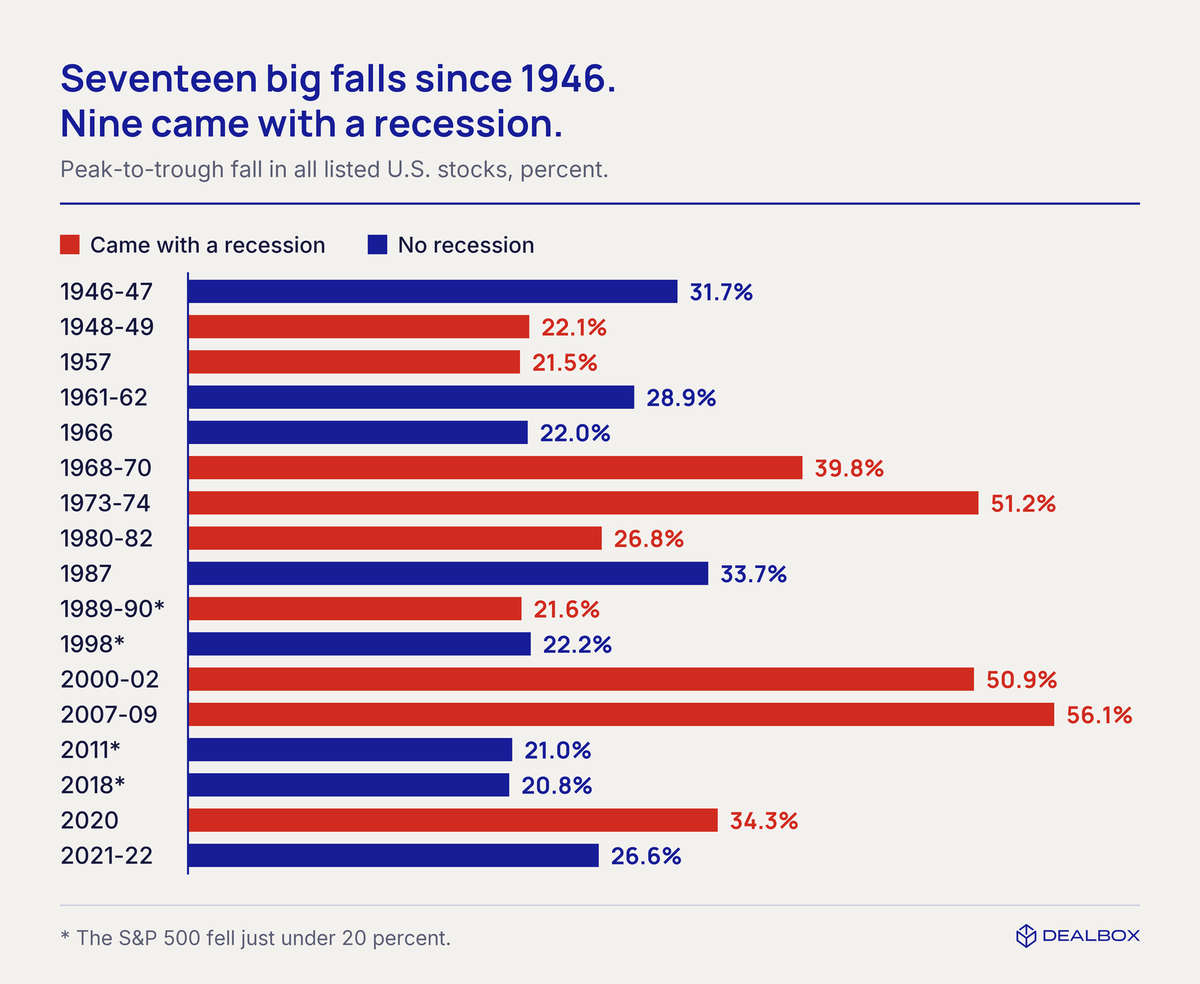
Can consumers handle it? Furman's answer is yes. A 25 percent fall would take about 0.6 percentage points off economic growth over the next year. People have spent about 1 cent of every dollar the market has gained, so they would not need to cut back much on the way down. Since 1946, stocks have fallen 20 percent or more 17 times, and nine of those falls came with a recession. He counted only what shoppers do, and he left the other effects for later posts. Read his post on consumers.
Would the Federal Reserve step in? Curnutt thinks a deep enough selloff may force the Fed to stop tightening. Paul Krugman, the economist, doubts that would be enough. He wrote on November 8 that if AI is a bubble and it bursts, a recession would almost surely follow. He expects the recovery to be slow even if the recession is shallow, with unemployment elevated for several years. Read Krugman's post.
My take: Furman counted only shoppers, and his answer is reassuring. What stood out to me is how much of the economy is joined at the hip with AI. Curnutt said eight stocks make up 35 percent of the index, and that the same imbalance shows up in what companies are spending. He said stocks could fall further if that spending slows and reaches the wider economy. The market is trying to find a new level, and my sense is that the election is one reason it has not found it yet.
Issuer Spotlight on Vault One

This month's Issuer Spotlight is Vault One Technologies, the Verified Metals Custody company led by William Stephens, whose raise we packaged this summer. It builds the evidence layer for physical precious metals, covering both the bars in a vault and the ore still in the ground.
Vault One is conducting a general solicitation offering under Rule 506(c) of Regulation D, open to verified accredited investors only. If you are a verified accredited investor and want to learn more, the Company's page on the platform is here: Vault One on Deal Box.
As always: Deal Box is not a broker-dealer and does not recommend any investment. We are compensated by issuers for technology and advisory services only, never on transactions. Nothing in this Spotlight is an offer, a solicitation, or investment advice; any offer is made only through the Company's offering documents.
Understanding the Deal Box Ecosystem, Part 1 of 6. Orobit and Smart Contracts on Bitcoin

Money is moving onto the internet, and someone has to keep the record. Here is how Orobit lets agreements run on Bitcoin, in plain words.
Phone Bans Add a Week or Two of Learning

Harvard's Center for Education Policy Research followed about 3.3 million students over five school years. Some of their schools require students to lock their phones in pouches. Students learned slightly more each year after their school adopted the pouches, according to Harvard. The researchers put the gain at one to two weeks of extra learning a year. That is about two minutes in every hour of class.
Two ways in
Raising, or know someone who is. Build your investor portal free and keep the whole round.
Investing as an accredited investor. See what is live on the platform. Verification runs first, before any offering materials are available.
(Deal Box operates as a Title II matchmaking platform under the JOBS Act Section 201(c) exemption. We charge issuers for technology and advisory services and take no transaction fees from anyone. We are not a broker-dealer.)
A note from the desk
Our dog had one of the chickens in his mouth, and the chicken survived. I built them this coop, and they are safe and happy in it now. In a week like this one, it reminded me that sometimes you have to wait for the eggs to hatch.

More to come next Friday.
Best,
Thomas
At the desk | November 20, 2026

The Deal Box Dispatch is published weekly every Friday. Deal Box operates as a Title II matchmaking platform under the JOBS Act Section 201(c) exemption, with zero transaction fees. We are not a broker-dealer. We earn on technology and advisory services provided to issuers only. Nothing in this newsletter is a recommendation, solicitation, or offer to buy or sell any security.